The Trump administration appeared before a federal appeals court this week to advance the legal theory that presidential records — created in a government building, by a government employee, using government resources, in the course of carrying out government duties — are the private property of the individual who happened to be standing in the Oval Office at the time. The Bureau of Workplace Analogies confirmed this is not typically how employment works.
Administration lawyers argued that the Presidential Records Act, a law passed in 1978 specifically because a previous president had also believed the records were his, does not mean what it says, or alternatively means something different, or possibly does not apply here for reasons that will be clarified in a forthcoming brief. The court listened attentively. Several judges took notes.
"The American people do not have a cognizable interest in documents they paid to produce, about decisions made in their name, by an official whose salary they fund, in a building their ancestors literally constructed," a senior administration official explained in a statement released by the Office of Things That Are Now Our Position. "This is not complicated."
Historians reached for comment noted that the Presidential Records Act was enacted following Richard Nixon's assertion that the White House tapes and documents were his personal property — an argument that courts rejected, that Congress legislated against, and that has now been reassembled and returned to the federal judiciary like a haunted piece of furniture no one can seem to throw away. The Nixon Presidential Library, a publicly funded institution, declined to comment.
Legal analysts described the administration's position as a workplace intellectual property dispute in which the employee is claiming ownership of all work product generated during business hours, on company equipment, at the direction of their employer, for their employer's explicit benefit. Standard employment contracts resolve this question in a single clause, typically on page four, which most people sign without reading. The United States government, it has emerged, did not include such a clause in the Constitution, an oversight the Framers would likely find embarrassing if any of them were available to ask.
The Bureau of Archival Nuance confirmed that presidential records are currently classified into two categories under federal law: "presidential records," which belong to the public, and "personal records," which do not. The administration's argument, reduced to its essential form, is that everything is the second category. Asked to identify a document that would qualify as a presidential record under this framework, a spokesperson said the question was hypothetical and referred reporters to the Department of Justice, which did not respond by press time.
A survey of federal employees conducted by the Office of Workforce Clarification found that 94 percent were aware their employers retained ownership of documents produced in their professional capacity. The remaining 6 percent were asked follow-up questions. It is not known whether any of them are currently litigating the matter in a federal appeals court, though the Bureau of Ongoing Developments says it is monitoring the situation.
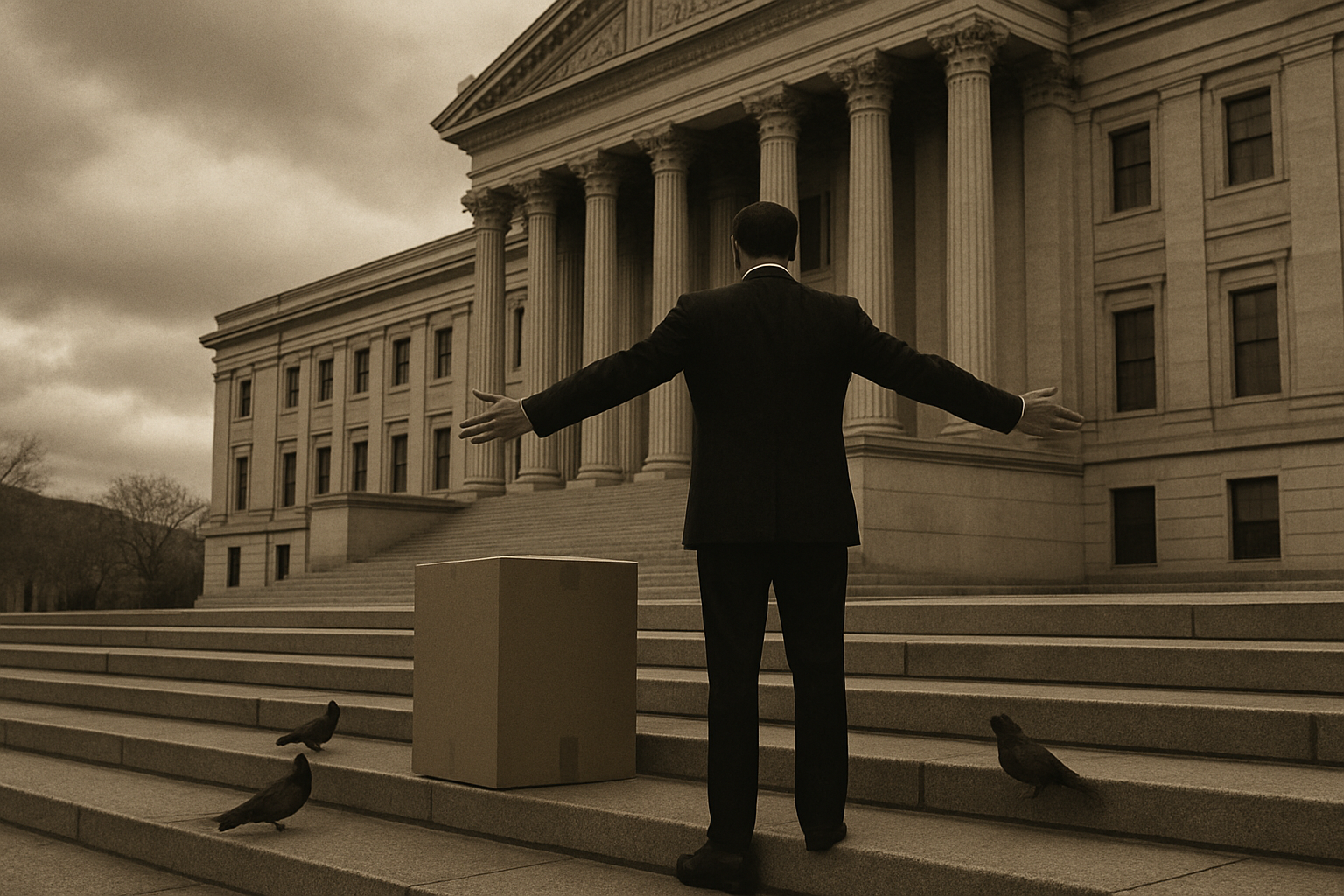
The appeals court is expected to issue a ruling in the coming months. Whatever it decides, legal scholars note, the underlying question — whether the public has a right to know what its government is doing — will remain available for future clarification. The cardboard box, sources confirmed, is still on the steps.