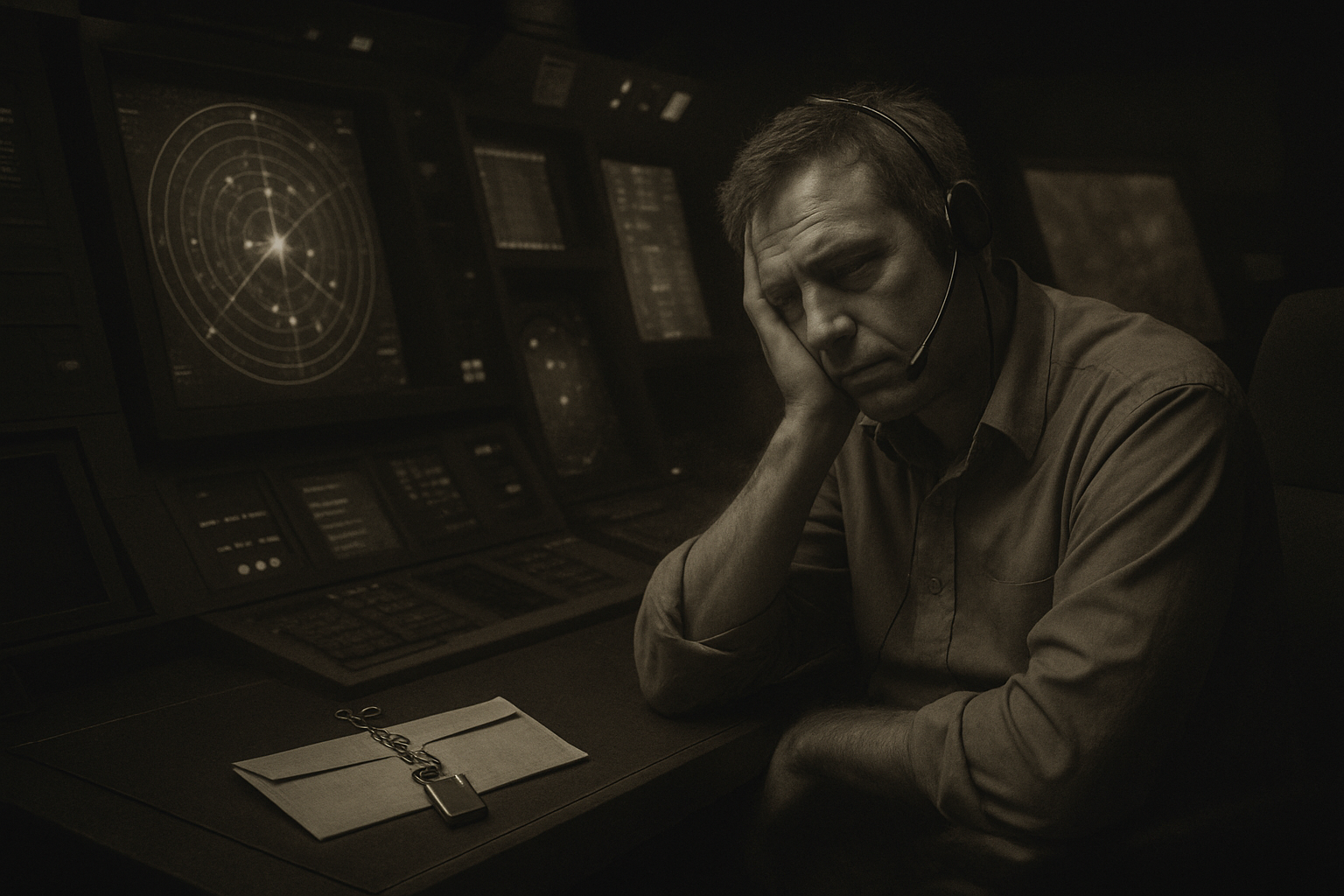
WASHINGTON — The Federal Aviation Administration announced this week that it has developed a comprehensive solution to its chronic air traffic controller shortage, which involves withholding the pay raise specifically allocated by Congress to address the air traffic controller shortage until there is no longer an air traffic controller shortage.
The strategy, described by agency officials as "performance-contingent compensation alignment," centers on a 2.8% pay increase that Congress funded expressly to attract new controllers to a system the FAA itself has characterized as critically understaffed. The raise will be released to controllers once staffing levels reach an acceptable threshold. Staffing levels will reach an acceptable threshold once conditions are sufficiently attractive to recruit new controllers. The FAA did not elaborate on how these two events would be sequenced.
"The Bureau of Workforce Incentive Deployment has determined that compensation improvements are most effectively delivered in contexts of demonstrated operational sufficiency," said an unnamed agency official, reading from a document that sources described as a single page, double-spaced. The official then boarded a flight operated by pilots who had received their raises unconditionally.
According to the National Air Traffic Controllers Association, the FAA is currently short approximately 3,000 certified controllers, a figure the agency does not dispute. Training a single controller to full certification takes, on average, three to five years, meaning the staffing gap cannot close rapidly under any circumstances — a timeline the FAA's compensation strategy does not appear to account for, or did account for and then set aside.
The FAA Administrator was blasted by members of Congress at a recent oversight hearing, where legislators noted that the agency had been allocated funds for the express purpose of making the job more appealing, and had instead converted those funds into a organizational aspiration. The Administrator indicated that the agency remained committed to resolving the shortage, which the agency's current policy structurally prevents.
It is worth noting, as a verified fact requiring no embellishment, that air traffic controllers in the United States are currently required by the FAA's own scheduling guidelines to work mandatory six-day weeks at numerous facilities — a condition the agency has acknowledged contributes directly to attrition, fatigue, and the staffing shortage that must be resolved before controllers receive compensation intended to reduce attrition and fatigue.
The Bureau of Circular Resolution Frameworks declined to comment, citing insufficient staffing to process media inquiries. A spokesperson indicated the bureau expects to hire additional communications personnel once budget conditions improve, and that budget conditions are expected to improve once additional personnel are hired.
At press time, seventeen major airports were operating with staffing levels the FAA classifies as below critical minimums. Planes landed nonetheless, guided by the existing controllers, who remain aware that their raise is waiting for them on the other side of a problem they are too few, and too tired, to solve alone.